Knowing how many gallons of water are in your pool isn’t just trivia, it’s essential for proper maintenance! The right chemical doses, filtration times, and even heating costs depend on your pool’s volume.
Why It Matters
Chemical Accuracy – Pool chemicals are measured per gallon. Over or under dosing can affect water quality and safety.
Filter Efficiency – Knowing the volume helps you set the correct pump run time to circulate all the water.
Heating Costs – The more gallons, the more energy it takes to heat your pool.
How to Calculate Your Pool’s Gallons
For rectangular or square pools:
Length (ft) × Width (ft) × Average Depth (ft) × 7.5 = Gallons
For round pools:
Diameter (ft) × Diameter (ft) × Average Depth (ft) × 5.9 = Gallons
For oval pools:
Length (ft) × Width (ft) × Average Depth (ft) × 5.9 = Gallons
Example:
A pool that’s 30 ft long, 15 ft wide, and has an average depth of 5 ft:
30 × 15 × 5 × 7.5 = 16,875 gallons
Irregular-Shaped Pools:
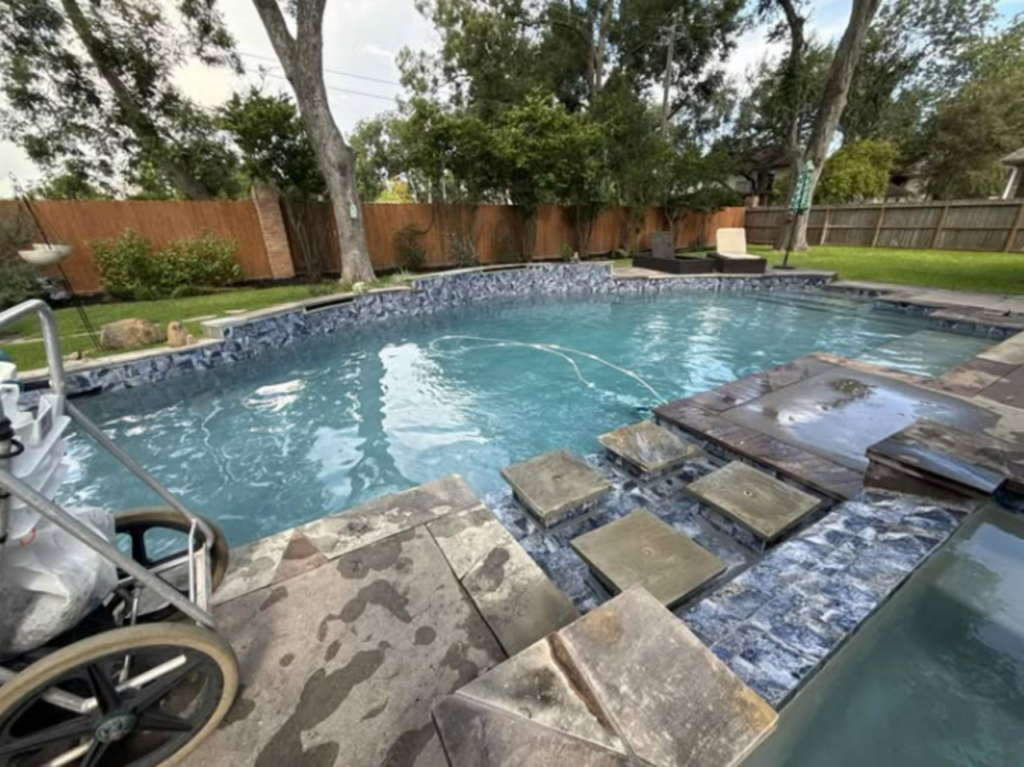
If your pool isn’t a perfect rectangle, oval, or circle draw a quick blueprint of it. Divide it into smaller rectangles, squares, or circles, calculate each section separately, and then add them together for a close approximation.
Pro Tip: If your pool has a shallow and deep end, average the depths before calculating.
At ACORB POOLS, we always calculate your exact pool volume before adding chemicals so your water stays crystal clear, safe, and comfortable.
 Call us at 832-818-8584 or
  info@acorbllc.com for professional pool care in the Fort Bend area.