Saltwater pools are becoming increasingly popular in Texas and across the U.S. but how do they actually work, and are they the right choice for your home?
 How Salt Pools Work
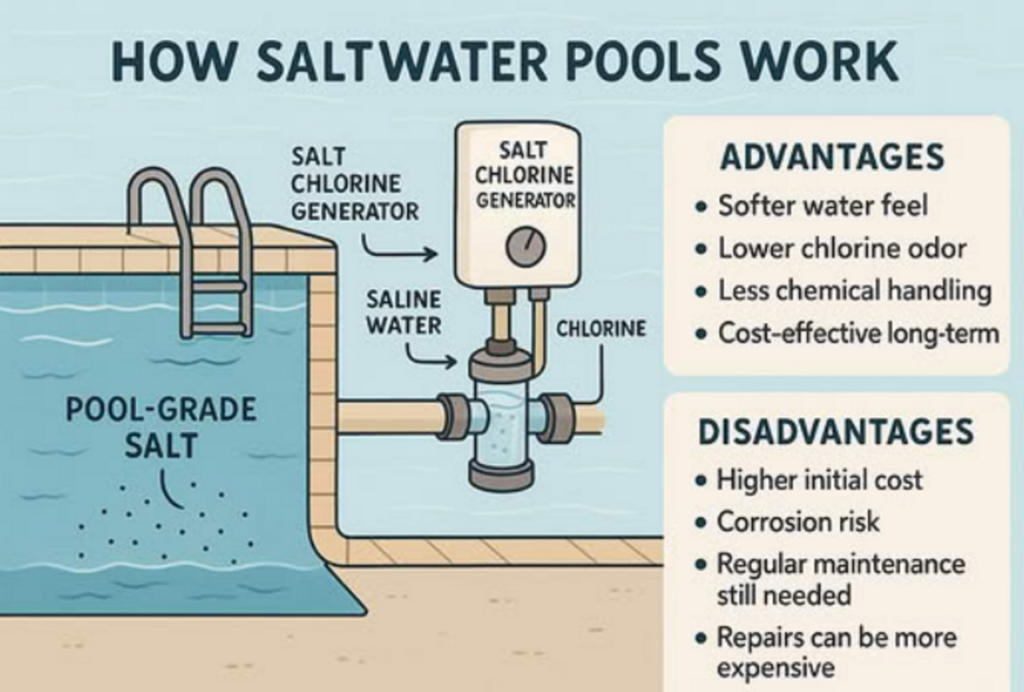
A saltwater pool uses a special device called a salt chlorine generator. Instead of adding chlorine manually, you add pool-grade salt to the water. The generator then converts the salt into chlorine through a process called electrolysis. This chlorine sanitizes your pool just like traditional chlorine, but it’s automatically produced as long as the system is running.
 Advantages of Saltwater Pools
1. Softer water feel
Saltwater pools are gentler on your skin, eyes, and hair. Swimmers often describe the water as feeling “silkier.”
2. Lower chlorine odor
Since chlorine is produced steadily and in lower concentrations, there’s less of that harsh chlorine smell.
3. Less chemical handling
You won’t need to store and handle buckets of chlorine tablets or shock as frequently.
4. Cost-effective long-term (sometimes)
While the upfront cost is higher, many homeowners save money over time due to fewer chemical purchases.
 Disadvantages of Saltwater Pools
1. Higher initial cost
Installing a salt chlorine generator typically adds $1,200–$2,000 to your setup.
2. Corrosion risk
Salt is mildly corrosive. Without proper management, it can damage metal fixtures, pool heaters, or stone surfaces over time.
3. Regular maintenance still needed
Salt systems still require balancing pH, stabilizer, and cleaning the cell regularly to work properly.
4. Repairs can be more expensive
If the salt cell or control board malfunctions, replacement can be costly.
 Bottom Line:
Saltwater pools are a potentially lower-maintenance and swimmer-friendly alternative to traditional chlorine pools, but they still need regular care and professional attention to stay in top shape.
 Need help maintaining your salt system? We’re here to help!