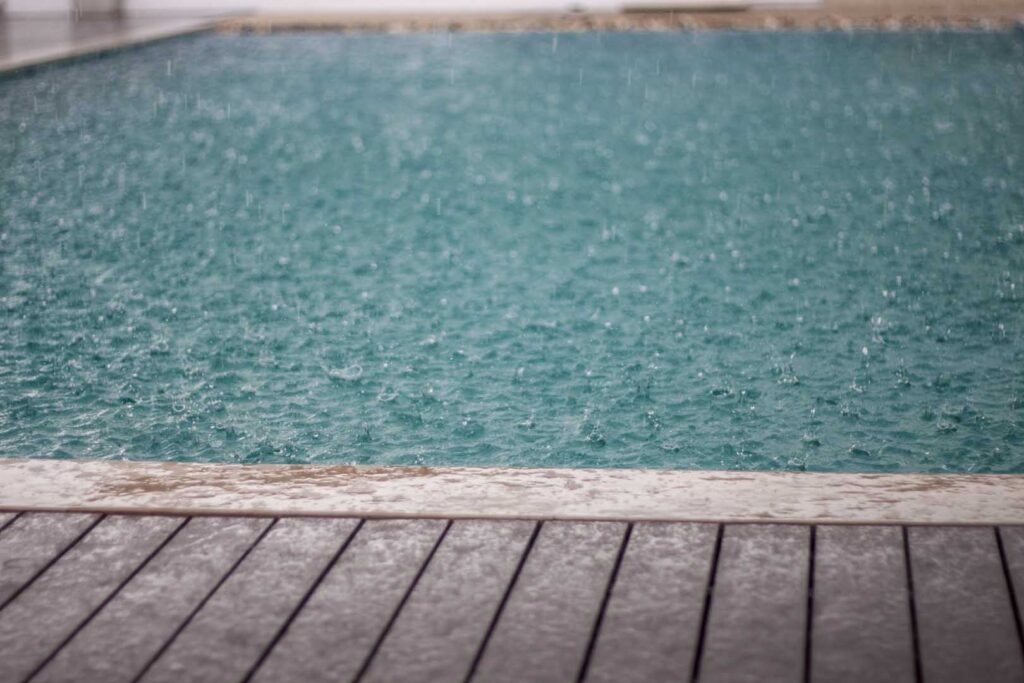
After a heavy rainstorm, many homeowners look at their pool and think everything is fine because the water still looks clear. In reality, rain can have a much bigger impact on your pool than most people realize.
Even though rainwater seems clean, it can dilute your pool chemicals, introduce contaminants, and create the perfect conditions for algae and bacteria to grow. The longer those issues go unaddressed, the more difficult and expensive they can become to fix.
Understanding how rain affects your pool can help you prevent problems before they start and keep your water clean, safe, and ready to enjoy.
Rain Changes Your Pool’s Water Chemistry
One of the biggest effects of heavy rain is dilution.
When several inches of rain fall into your pool, the additional water lowers the concentration of the chemicals that keep your pool balanced. Chlorine levels often decrease, making it harder for your pool to sanitize the water effectively.
Rain can also affect your pH, alkalinity, and other important chemical levels. Once those numbers move outside the recommended range, your water becomes more vulnerable to algae growth, cloudy water, and bacteria.
This is why testing your water after a major storm is so important. Even if your pool was perfectly balanced before the rain, those numbers may have changed significantly afterward.
Storms Bring More Than Water
Rain is only part of the problem.
Storms also bring dirt, pollen, leaves, grass clippings, insects, and other debris into your pool. If you have trees around your yard, you’ll likely find even more organic material floating in the water after a storm.
As this debris breaks down, it consumes chlorine and creates additional work for your filtration system. If the debris is left sitting in the pool for several days, it can stain surfaces and contribute to algae growth.
Removing debris as soon as possible helps your filtration system work more efficiently and reduces the amount of chemicals needed to restore water quality.
Your Filtration System Has to Work Harder
After heavy rain, your pool’s filtration system has much more work to do.
The filter has to capture dirt, leaves, pollen, and other contaminants that washed into the water. If your filter is already dirty or overdue for cleaning, it may struggle to keep up.
This is one reason routine maintenance is so valuable. A clean filter and properly functioning pump allow your pool to recover much faster after bad weather.
If circulation is poor, contaminants remain in the water longer, increasing the likelihood of cloudy water and algae.
Watch Your Water Level
Heavy rain can also raise your pool’s water level above its normal operating range.
When the water becomes too high, skimmers may not work as efficiently because they are designed to operate at a specific level. Instead of pulling debris off the surface, leaves and insects may continue floating until they sink to the bottom.
In some cases, excess water may need to be drained to restore proper circulation and skimming performance.
Keeping the correct water level helps your entire pool system operate efficiently.
Don’t Wait Until the Water Turns Green
One mistake many homeowners make is waiting until they see a problem before taking action.
By the time the water becomes cloudy or starts turning green, the issue has already been developing for several days. Restoring a neglected pool usually requires more chemicals, more labor, and more time than simply addressing the changes immediately after the storm.
Checking your water chemistry, removing debris, and inspecting your equipment soon after heavy rainfall can prevent much larger problems from developing.
Every Storm Is Different
Not every rainstorm affects your pool the same way.
A brief summer shower may have very little impact, while several hours of heavy rain can significantly change your water chemistry. Wind, nearby landscaping, surrounding trees, and overall pool usage also play a role in how much maintenance your pool needs afterward.
Because every pool is different, there is no universal formula for storm recovery. The best approach is to evaluate your pool after each significant rainfall and make adjustments based on its condition.
Professional Maintenance Helps Protect Your Investment
One of the advantages of professional pool service is knowing that someone is looking beyond the surface.
After heavy rain, a professional doesn’t simply test the chlorine level. They inspect the overall condition of the pool, check the equipment, evaluate circulation, remove debris, and make the adjustments needed to keep everything running properly.
That preventative approach helps avoid costly repairs and keeps your pool healthier throughout the swimming season.
The Bottom Line
Heavy rain affects much more than the appearance of your pool.
It can dilute your chemicals, change your water balance, introduce debris, strain your filtration system, and create conditions where algae can quickly develop. Even if your water still looks clear, problems may already be starting beneath the surface.
Testing your water, cleaning out debris, checking your equipment, and restoring proper chemical balance after a storm are some of the best ways to protect your investment. Staying proactive after heavy rain keeps your pool cleaner, your equipment working properly, and your water safe for your family to enjoy all season long.