One of the questions I hear most from homeowners is, “How long should I run my pool pump each day?”
The answer is not always as simple as eight hours or twelve hours. Every pool is different, and the amount of time your pump should run depends on several factors, including the size of your pool, the weather, how often it’s used, and the condition of your equipment.
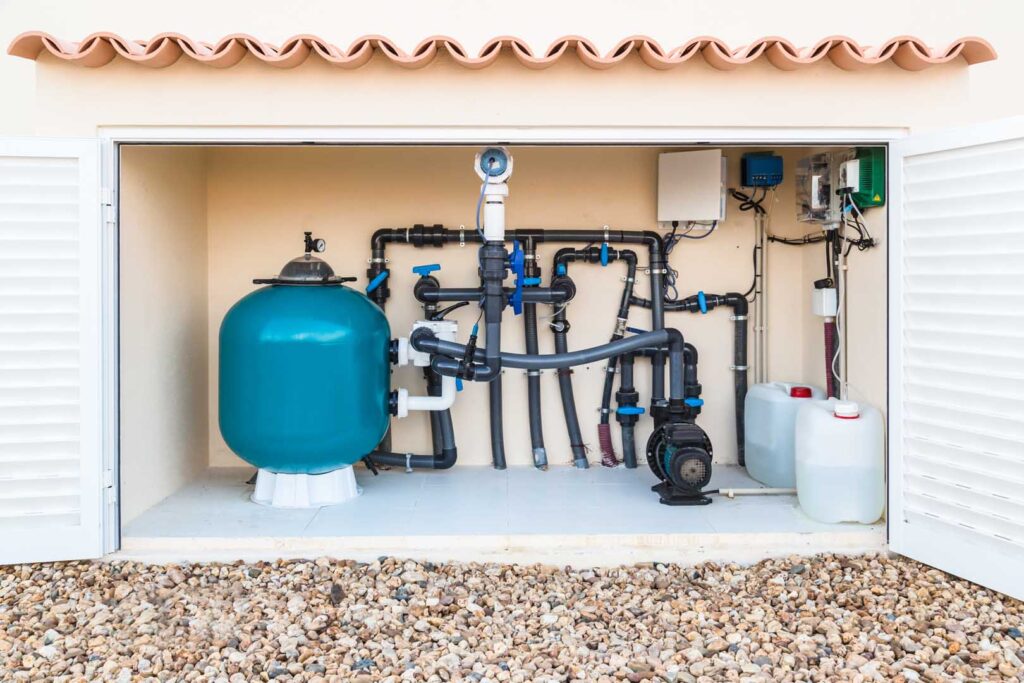
Your pool pump is one of the most important parts of your entire pool system. It keeps water circulating through the filter, distributes chemicals evenly throughout the pool, and helps remove dirt and debris. Without proper circulation, even perfectly balanced water can quickly develop problems.
Understanding what your pool pump actually does can help you find the right schedule for your pool.
Why Your Pool Pump Is So Important
Think of your pump as the heart of your pool.
It continuously moves water through the filtration system, allowing dirt, leaves, pollen, insects, and other contaminants to be removed. As the water circulates, chemicals are also distributed evenly, helping maintain safe and balanced water.
If the pump isn’t running long enough, water can become stagnant in certain areas of the pool. Those low circulation areas are often where algae begins to develop first.
Running your pump consistently is one of the easiest ways to keep your pool healthy.
There Is No One Size Fits All Answer
Many homeowners search for a specific number of hours they should run their pump every day, but there isn’t one answer that works for everyone.
A smaller pool with minimal use may require less run time than a large pool that is used daily by a family. Pools surrounded by trees often collect more debris, which means the filtration system has more work to do. Hot summer temperatures, heavy rain, and frequent swimming can also increase the amount of circulation your pool needs.
Rather than following a fixed schedule, it’s better to evaluate how your pool is performing and make adjustments based on the season and current conditions.
Water Circulation Keeps Your Pool Balanced
Your chemicals cannot do their job if they are not circulating properly.
When chlorine and other chemicals are added to the pool, the pump helps distribute them evenly throughout the water. Without adequate circulation, some areas of the pool may receive too much treatment while others receive very little.
Good circulation also helps move floating debris toward the skimmers where it can be removed before it sinks to the bottom.
Keeping water moving is one of the simplest ways to prevent many common pool problems.
The Weather Makes a Difference
Your pump schedule may need to change throughout the year.
During the hottest months of summer, pools are used more often and warmer water creates conditions where algae can grow more quickly. Heavy rainstorms also introduce dirt, debris, and contaminants that require additional filtration.
After a storm or a weekend with lots of swimmers, it often makes sense to allow the pump to run longer to help restore water quality.
During cooler months, your pool may not require the same amount of circulation.
Adjusting your pump schedule based on changing conditions helps maintain clean water while avoiding unnecessary energy use.
Don’t Ignore Your Equipment
A properly running pump is only part of the equation.
Dirty filters, clogged skimmer baskets, blocked return jets, or worn equipment can all reduce water flow. Even if your pump is running for the recommended amount of time, poor circulation caused by neglected equipment can still lead to cloudy water or algae.
Routine maintenance includes inspecting these components to make sure the entire circulation system is operating efficiently.
Sometimes improving circulation has less to do with running the pump longer and more to do with making sure everything is functioning properly.
Running Your Pump Longer Isn’t Always Better
Some homeowners assume the safest approach is to leave the pump running around the clock.
While there are situations where extended run times are beneficial, continuously operating your pump isn’t always necessary. It increases energy costs and adds wear to the equipment without providing significant additional benefits for many pools.
The goal isn’t to run the pump as long as possible. It’s to run it long enough to maintain good circulation and water quality while operating efficiently.
Finding that balance helps keep maintenance costs under control while protecting your equipment.
Let Your Pool Tell You What It Needs
Every pool has its own maintenance routine.
Instead of relying on a single recommendation you found online, pay attention to how your pool responds. If you’re consistently dealing with cloudy water, algae, or debris buildup, your circulation schedule or equipment may need to be adjusted.
A professional pool service can also evaluate your system and recommend the ideal pump schedule based on your pool’s size, equipment, and how it’s used throughout the year.
When your pump, filter, water chemistry, and maintenance routine all work together, your pool stays cleaner, your equipment lasts longer, and you spend less time trying to solve problems. Running your pool pump isn’t about following a universal rule. It’s about giving your pool the circulation it needs to stay healthy so you can spend more time enjoying it and less time worrying about maintenance.