A pool pump that keeps losing prime is more than just an inconvenience. Without proper water flow, your pool cannot circulate chemicals effectively, filter debris properly, or operate equipment such as heaters and salt systems the way it should.
If your pump basket is filling with air, the pump struggles to start, or you notice weak flow from the return jets, the pump may be losing prime.
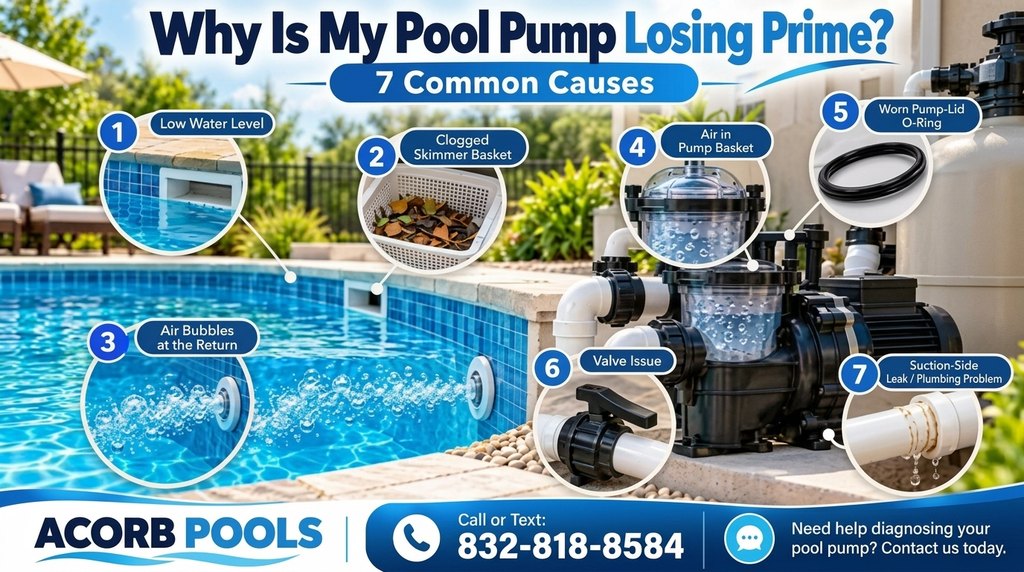
👇 Here are seven of the most common reasons this happens:
1. The Pool Water Level Is Too Low
One of the easiest problems to overlook is the water level.
If the water drops below the proper level of the skimmer opening, the skimmer can begin pulling air instead of water. Once air enters the suction line, the pump may lose prime.
Ideally, the pool water should normally sit around the middle of the skimmer opening.
During hot Houston summers, evaporation can lower the water level surprisingly quickly.
If your pump starts making unusual noises or you see air entering the pump basket, check the water level first.
2. The Skimmer Basket Is Clogged
Leaves, pine needles, grass, insects, and other debris can quickly fill a skimmer basket.
When the basket becomes heavily clogged, water flow to the pump becomes restricted. The pump may begin struggling to pull enough water and can eventually lose prime.
Regularly emptying the skimmer basket is one of the simplest ways to protect your circulation system.
The pump basket should also be checked, since debris can accumulate there as well.
3. The Pump Lid O-Ring Is Damaged or Dry
The O-ring underneath the pump lid creates an airtight seal.
If the O-ring becomes:
🟡 Dry
💥 Cracked
🔻 Flattened
🦠 Dirty
❌ Improperly seated
air may be pulled into the pump while it is operating.
This type of air leak may not necessarily leak water outward, which can make it difficult to notice.
Cleaning and lubricating the O-ring with a pool-safe lubricant can sometimes solve the problem. If the O-ring is worn or damaged, it should be replaced.
4. There Is an Air Leak on the Suction Side
A suction-side air leak is one of the most common reasons a pool pump repeatedly loses prime.
The suction side includes the plumbing between the pool and the pump.
Air can enter through:
🔹 Loose plumbing connections
🔹 Cracked fittings
🔹 Damaged unions
🔹 Pump drain plugs
🔹 Valve seals
🔹 Cracked pipes
🔹 Worn O-rings
Because these pipes operate under suction, they may pull air inward without showing an obvious water leak.
One common sign is air bubbles visible through the pump lid or bubbles coming from the pool return jets.
5. A Valve Is Closed, Partially Closed, or Malfunctioning
Pool plumbing systems often contain several valves controlling water from the skimmer, main drain, spa, cleaner, or other suction lines.
If one of these valves is accidentally closed or positioned incorrectly, the pump may not receive enough water.
Internal valve components can also wear out and allow air into the plumbing.
If your pump started losing prime after someone adjusted the pool valves, valve position should be one of the first things checked.
6. The Pump Impeller Is Clogged
The impeller is the internal component that moves water through the pump.
Small debris can sometimes pass through the baskets and become lodged inside the impeller.
Common examples include:
🍂 Leaves
🌲 Pine needles
💇 Hair
🌱 Small seeds
🌿 Organic debris
A partially clogged impeller can significantly reduce water flow.
The pump may still run, but circulation becomes weak and the pump may have difficulty maintaining prime.
Cleaning an impeller normally requires opening part of the pump, so homeowners who are unfamiliar with pool equipment may want to have a professional technician inspect it.
7. The Pump or Plumbing Has a Mechanical Problem
Sometimes the problem goes beyond a clogged basket or worn O-ring.
Possible issues include:
🚨 Cracked pump housing
🚨 Damaged pump lid
🚨 Failed shaft seal
🚨 Loose plumbing connections
🚨 Underground suction-line leaks
🚨 Damaged valves
🚨 Improper pump installation
Older equipment can also develop small cracks that allow air to enter the circulation system.
Finding these problems often requires systematic testing by an experienced pool technician.
How Do You Know Your Pool Pump Is Losing Prime?
Common warning signs include:
👀 Air visible inside the pump basket
🚱 Pump basket not filling completely with water
💧 Weak water flow from return jets
🫧 Bubbles coming from pool returns
🔊 Pump making unusually loud or inconsistent noises
🔄 Pump struggling to restart after shutting off
📉 Filter pressure lower than normal
⚠️️ Heater or salt system displaying flow errors
A properly operating pool pump should normally maintain a strong, consistent flow of water.
Don’t Ignore a Pump That Keeps Losing Prime
Running a pool pump without enough water can damage the equipment.
Pool pumps depend on circulating water for cooling and lubrication. If the pump repeatedly runs dry or partially dry, internal components can overheat and fail.
What begins as a small air leak or worn O-ring can eventually become a much more expensive repair.
Need Help Finding the Problem?
If your pool pump keeps losing prime, ACORB POOLS can help identify the cause and determine the proper repair.
We inspect pumps, skimmers, valves, plumbing connections, filters, and other components of the circulation system to find the source of the problem rather than simply treating the symptom.
ACORB POOLS
“We Don’t Just Skim and Go.”
📞 Call or text: 832-818-8584
✉️ Email: info@acorbllc.com
🌐 Website: www.acorbpools.com
If your pump is pulling air, losing prime, or struggling to circulate water properly, contact ACORB POOLS and let us diagnose the problem before it leads to more expensive equipment damage.