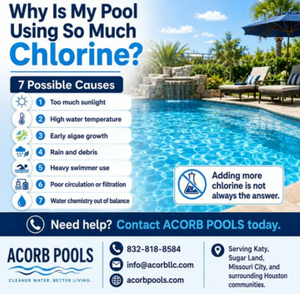
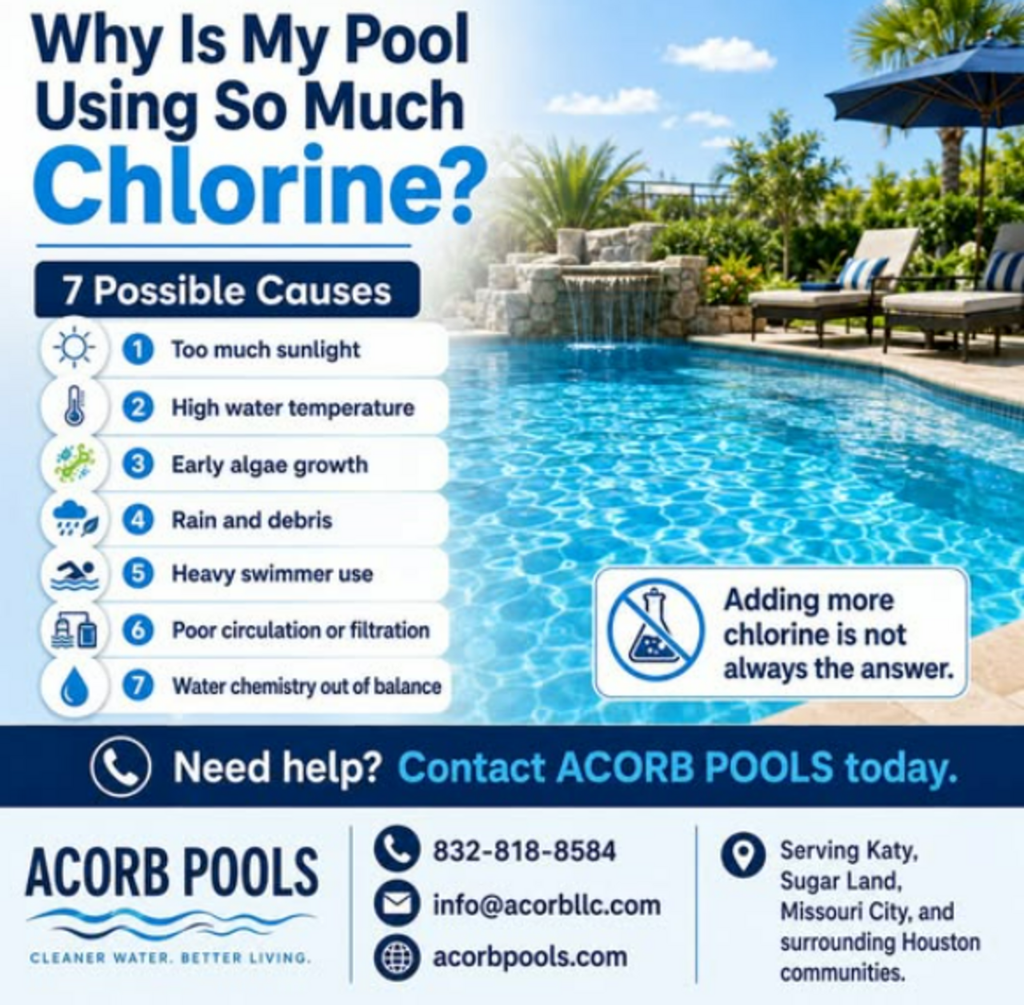
Are you adding chlorine to your pool over and over again, but the level keeps dropping? If your pool is using much more chlorine than it normally does, simply adding more chlorine won’t fix the real problem. Here are 7 common reasons:
- Intense sunlight The chlorine in the Houston area can be quickly destroyed, especially when the pool does not have the proper level of stabilizer (CYA). Too little CYA means chlorine disappears quickly. Too much CYA can also create problems by making chlorine less effective.
- High water temperatures Hot water increases chlorine demand and creates better conditions for algae and bacteria to grow. That is why pools often require more chlorine during the hottest months of the year.
- Algae that is already growing Your pool doesn’t need to be green to have algae. Microscopic algae can start developing while the water still looks clear. One of the first warning signs can be dropping chlorine levels.
- Rain and organic debris Heavy rain can dilute your pool water and bring in dirt, leaves, pollen, insects, and other contaminants. Chlorine is consumed as it oxidizes all that organic material, which can cause a rapid drop in chlorine levels.
- Heavy swimmer use Pool parties and increased swimming can increase chlorine demand. Sweat, sunscreen, body oils, cosmetics, and other contaminants must be handled by your sanitizer.
- Circulation or filtration issues Sometimes the problem isn’t the amount of chlorine you are adding. Your water chemistry is out of balance.
- Your water chemistry is out of balance pH, CYA, alkalinity, calcium, and other factors can affect how chlorine works. High phosphate levels are not always the solution! If your pool chlorine keeps disappearing, the important question is WHY? Finding the cause early can prevent chlorine from disappearing quickly. Here are 7 common reasons:
- Intense sunlight Chlorine in the Houston area can be destroyed quickly, especially when the pool does not have the proper level of stabilizer (CYA). Chlorine is consumed as it oxidizes all that organic material, which can cause a rapid drop in chlorine levels after a storm!
- Heavy swimmer use Pool parties and increased swimming can increase chlorine demand! Sweat, sunscreen, body oils, cosmetics, and other contaminants must be handled by your sanitizer!
- Circulation or filtration issues Sometimes the problem isn’t the amount of chlorine you are adding! Your water chemistry is out of balance!
- Your water chemistry is out of balance. pH, CYA, alkalinity, calcium, and other factors can affect how chlorine works!
¡¡¡¡¡¡¡¡¡¡¡¡¡¡¡¡¡¡¡¡¡¡¡¡¡¡¡¡¡¡¡¡¡¡¡¡¡¡¡¡¡¡¡¡¡¡¡¡¡¡¡¡¡¡¡¡¡¡¡¡¡¡¡¡¡¡¡¡¡¡¡¡¡¡¡¡¡¡¡¡¡¡¡¡¡¡¡¡¡¡¡¡¡¡¡¡¡¡¡¡¡¡¡¡¡¡¡¡¡¡¡¡¡¡¡¡¡¡¡¡¡¡¡¡¡¡¡¡¡¡¡¡¡¡¡¡¡¡¡¡¡¡¡¡¡¡¡¡¡¡¡¡¡¡¡¡¡¡¡¡¡¡¡¡¡¡¡¡¡¡
At ACORB POOLS, we provide professional weekly pool service, including water testing and balancing, vacuuming, basket cleaning, equipment checks, and digital service reports with chemistry readings and photos after every visit.
Is your pool consuming too much chlorine?
Contact us today and let us help you identify the cause before your pool turns green.
ACORB POOLS 832-818-8584
Serving the Katy, Sugar Land, Missouri City, and surrounding Houston communities.