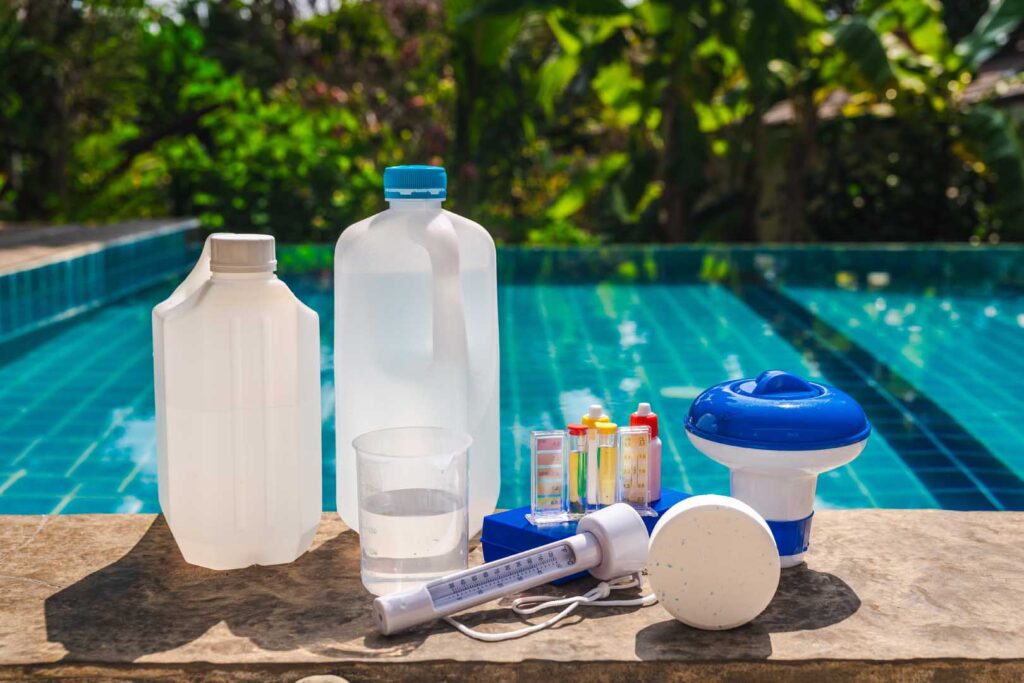
One of the most common misconceptions I hear from homeowners is that if they keep adding chlorine, their pool will take care of itself. Chemicals are an important part of pool maintenance, but they are only one piece of the equation.
A healthy swimming pool depends on several systems working together. Water chemistry, circulation, filtration, and routine cleaning all play a role in keeping your water safe and clear. If one of those areas is neglected, chemicals alone cannot make up the difference.
I’ve seen pools where homeowners faithfully added chlorine every week but still ended up with cloudy water, algae, or equipment problems. The issue usually wasn’t the chemicals. It was everything else that had been overlooked.
Your Pool Needs More Than Sanitizer
Chlorine is designed to sanitize your pool by killing bacteria and other harmful microorganisms. It helps keep the water safe for swimming, but it does not remove everything that ends up in your pool.
Leaves, dirt, pollen, insects, body oils, sunscreen, and other debris don’t simply disappear because chlorine is present. Those contaminants need to be physically removed through skimming, vacuuming, brushing, and filtration.
Think of chlorine as one member of a team. It has an important job, but it cannot do every job on its own.
Your Filter Does Much of the Cleaning
Many homeowners underestimate how important their filtration system really is.
Every time your pump is running, water is pulled through the filter where dirt and debris are captured before clean water returns to the pool. Without proper filtration, contaminants continue circulating through the water no matter how much chlorine you add.
A dirty or clogged filter also becomes less effective over time. As water flow decreases, the entire pool system becomes less efficient.
Routine maintenance includes inspecting and cleaning the filter so it can continue doing its job properly.
Good Circulation Keeps Everything Working Together
Even perfectly balanced water chemistry won’t help if the water isn’t moving.
Your pool pump creates circulation that distributes chemicals evenly throughout the pool. It also allows debris to reach the skimmers and filter where it can be removed.
If circulation is poor because of clogged baskets, blocked return jets, or equipment issues, certain areas of the pool can become stagnant. Those spots often become the first place algae begins to develop.
Proper circulation helps every part of your pool system work more effectively.
Brushing Prevents Problems Before They Start
One maintenance task that many homeowners overlook is brushing the pool walls and steps.
Algae and other contaminants can begin attaching themselves to pool surfaces before they become visible.
Brushing helps loosen that buildup so it can be filtered out instead of continuing to grow.
Without regular brushing, algae can establish itself in corners, steps, and other areas with limited water movement.
This simple step often prevents much larger problems from developing later.
Weather Changes Everything
Even if your pool is perfectly balanced today, that doesn’t mean it will stay that way.
Heavy rain can dilute chemicals. Hot weather burns through chlorine more quickly. Wind introduces dirt and debris, while increased pool use adds oils, sunscreen, and other contaminants to the water.
Because conditions change throughout the season, pool maintenance is not something that can be done once and forgotten.
Your pool needs regular adjustments based on what’s happening each week.
Equipment Problems Affect Water Quality
Sometimes the problem has nothing to do with chemicals at all.
A failing pump, clogged skimmer, dirty filter, or damaged component can all affect your pool’s ability to stay clean. When water isn’t circulating properly, chemicals cannot reach every part of the pool efficiently.
Routine inspections help identify these issues before they begin affecting water quality.
This is one reason professional maintenance goes beyond simply testing the water. Every visit includes checking that the equipment responsible for keeping your pool clean is operating as it should.
Pool Care Is About Balance
The healthiest pools are not the ones with the most chemicals. They are the ones where every part of the system is working together.
Clean water depends on balanced chemistry, proper circulation, effective filtration, regular brushing, vacuuming, and equipment that is functioning correctly. When all of those pieces are maintained consistently, your pool stays cleaner with fewer problems throughout the season.
Adding extra chemicals is rarely the solution to poor maintenance. In fact, overusing chemicals can sometimes create new issues by throwing the water balance out of range.
A consistent maintenance routine keeps everything in check before small issues become larger ones.
Taking care of a pool is about understanding that no single product does all the work. Chemicals help sanitize the water, but they rely on the pump, filter, circulation system, and regular cleaning to be effective. When each part of the system receives the attention it needs, the result is cleaner water, healthier equipment, and a pool that’s ready to enjoy whenever you want to swim.