The Most Common Complaints We Hear About Previous Pool Companies
Most customers don’t switch pool companies lightly. When they do, the reasons tend to repeat themselves.
We’re excited to launch this space where we will regularly share valuable insights and tips about swimming pool care and maintenance. At ACORB POOLS, we believe that a well-maintained pool is the key to endless fun and relaxation, and we’re here to help you achieve just that.I’m Gonzalo, the owner of ACORB POOLS and a seasoned chemical engineer with ample experience in water treatment. Alongside me, our skilled technicians bring several years of expertise in installing and repairing swimming pool equipment. Together, we are dedicated to ensuring your pool remains in top-notch condition.In our blog, you’ll find detailed explanations on how your swimming pool equipment works, expert advice on maintaining your pool, and updates on how our services can keep your pool in optimal condition. Whether you’re a new pool owner or a seasoned pro, our blog aims to provide you with the knowledge and tools to ensure your pool is always at its best.Stay tuned for regular updates and feel free to reach out with any questions or topics you’d like us to cover. Here’s to a sparkling, well-maintained pool all year round!
Warm regards,
Gonzalo Bauza, MSC Chemical Eng.

Most customers don’t switch pool companies lightly. When they do, the reasons tend to repeat themselves.

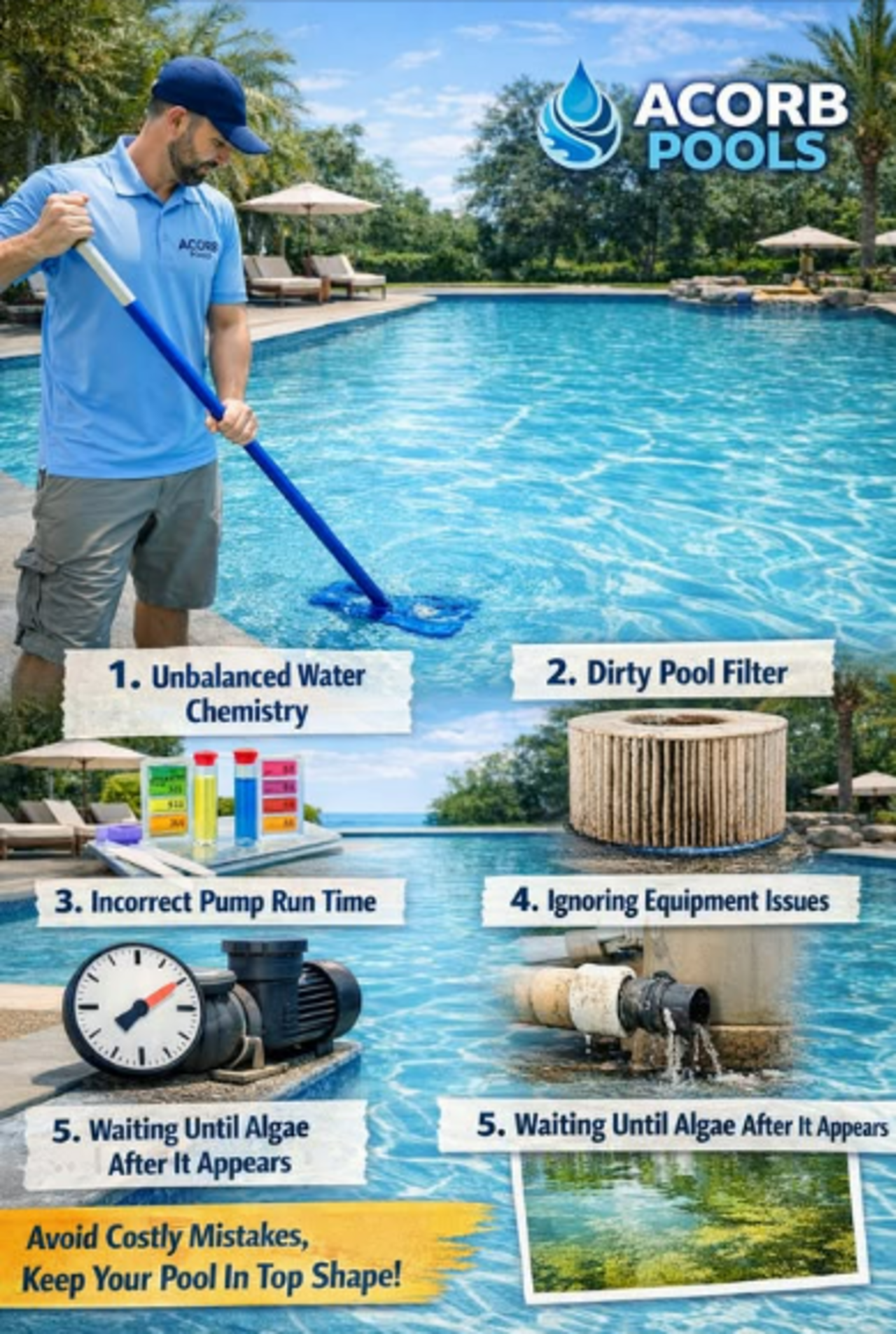
A sparkling, healthy pool doesn’t happen by accident. Many homeowners unknowingly make small mistakes that can lead to cloudy water, algae blooms, or expensive repairs. Here are 5 of the most common pool care slip ups and what you can do instead: 1. Skipping Regular Skimming and Debris Removal Leaves, bugs, and other debris don’t just make your pool look messy they can clog your filter and feed algae growth. Skim the surface of your pool daily or as often as needed to keep it clean and help your equipment work efficiently. 2. Inconsistent Water Testing Many pool owners only test water when something looks wrong. But by then, it’s often too late. Regularly testing your pool water helps you catch imbalances early and keep your water safe and clear. 3. Not Running Your Pump Enough Hours Per Day Your pump is essential for circulating water and keeping it clean.

When pool equipment fails, homeowners often assume replacement is the only answer. A proper diagnosis can sometimes save significant money.

Saltwater pools are becoming increasingly popular in Texas and across the U.S. but how do they actually work, and are they the right choice for your home? How Salt Pools Work A saltwater pool uses a special device called a salt chlorine generator. Instead of adding chlorine manually, you add pool-grade salt to the water. The generator then converts the salt into chlorine through a process called electrolysis. This chlorine sanitizes your pool just like traditional chlorine, but it’s automatically produced as long as the system is running. Advantages of Saltwater Pools 1. Softer water feel Saltwater pools are gentler on your skin, eyes, and hair. Swimmers often describe the water as feeling “silkier.” 2. Lower chlorine odor Since chlorine is produced steadily and in lower concentrations, there’s less of that harsh chlorine smell. 3. Less chemical handling You won’t need to store and handle buckets of chlorine tablets or
Send us a message and we will check your pool to give you a personalized quote. No need to be at home when we inspect the pool!
Professional, reliable service — limited availability, secure your spot now!